Categories
Latest blog
Why Plastic Jars Are Becoming the Preferred Packaging Choice in the Nutraceutical Industry
2026-05-29The global wellness market is evolving rapidly. From collagen powders and protein supplements to gummies, probiotics, and daily vitamins, consumers are looking for more than effective formulas — they also expect packaging that reflects quality, convenience, and sustainability.
For nutraceutical brands targeting North American and European markets, plastic jars have become one of the most practical and brand-friendly packaging solutions.
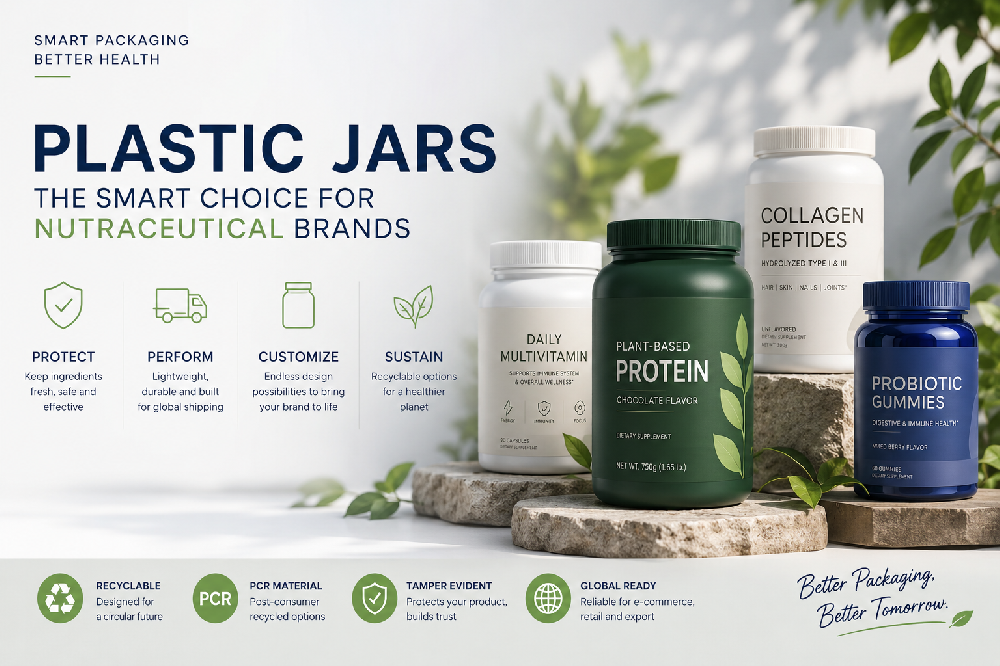
Compared with glass containers, plastic jars offer a lightweight yet durable alternative. Their impact resistance reduces breakage risks during transportation, warehousing, and e-commerce fulfillment.
For brands operating internationally, this means:
Lower shipping costs
Better protection during transit
Improved warehouse efficiency
Reduced product loss and returns
Whether products are sold through retail shelves, Amazon fulfillment centers, or direct-to-consumer channels, packaging performance matters.
Nutraceutical products often contain active ingredients that are sensitive to moisture, oxygen, and light exposure.
Plastic jars made from PET, HDPE, or PP materials provide excellent protection when combined with induction seals, foil liners, or tamper-evident closures.
This helps brands maintain:
Product freshness
Ingredient stability
Extended shelf life
Consumer confidence
For premium supplements, packaging is no longer just storage — it is part of product preservation.
The supplement industry is highly competitive, especially in Western markets where packaging aesthetics influence purchasing decisions.
Plastic jars offer extensive customization options that help brands stand out:
Matte, glossy, or soft-touch finishes
Frosted and translucent effects
Silk screen printing and hot stamping
Custom colors matched to brand identity
Wide-mouth designs for powders and gummies
Child-resistant or tamper-proof closures
Minimalist Scandinavian styling, clean clinical aesthetics, or natural wellness branding — plastic jars can adapt to different market trends with ease.
Consumers in Europe and the United States increasingly expect brands to adopt environmentally responsible packaging.
As a result, more nutraceutical companies are moving toward:
PCR (Post-Consumer Recycled) plastic materials
Lightweight packaging structures
Recyclable mono-material solutions
Reduced carbon footprint during logistics
Sustainable packaging is no longer viewed as an option; it is becoming part of brand positioning.
In today’s nutraceutical market, packaging does more than hold a product.
It protects sensitive formulas, supports efficient distribution, enhances shelf visibility, and communicates brand values.
Plastic jars offer the balance modern brands need: functionality, customization, sustainability, and premium presentation.
As health and wellness continue to expand globally, plastic packaging solutions will play an increasingly important role in helping nutraceutical brands succeed in competitive Western markets.